Pink Mold in Your Shower: What It Really Means (Florida Mold Assessor Guide)
Florida Licensed Mold Assessor; MRSA #3958
You wipe it away on Sunday, and by Friday the pink film is back in the same shower corner, along the caulk, or around the drain. Most people call it pink mold, and the first question is usually whether it is dangerous. Here is the idea this guide is built on: color is a clue, not a diagnosis. The pink tint tells you something about moisture, but on its own it does not confirm what is growing or how concerned you should be. My job is to guide you through identifying what is actually in your property, not to sell you fear. This article is educational and is not medical advice.
What is the pink stuff in my shower?
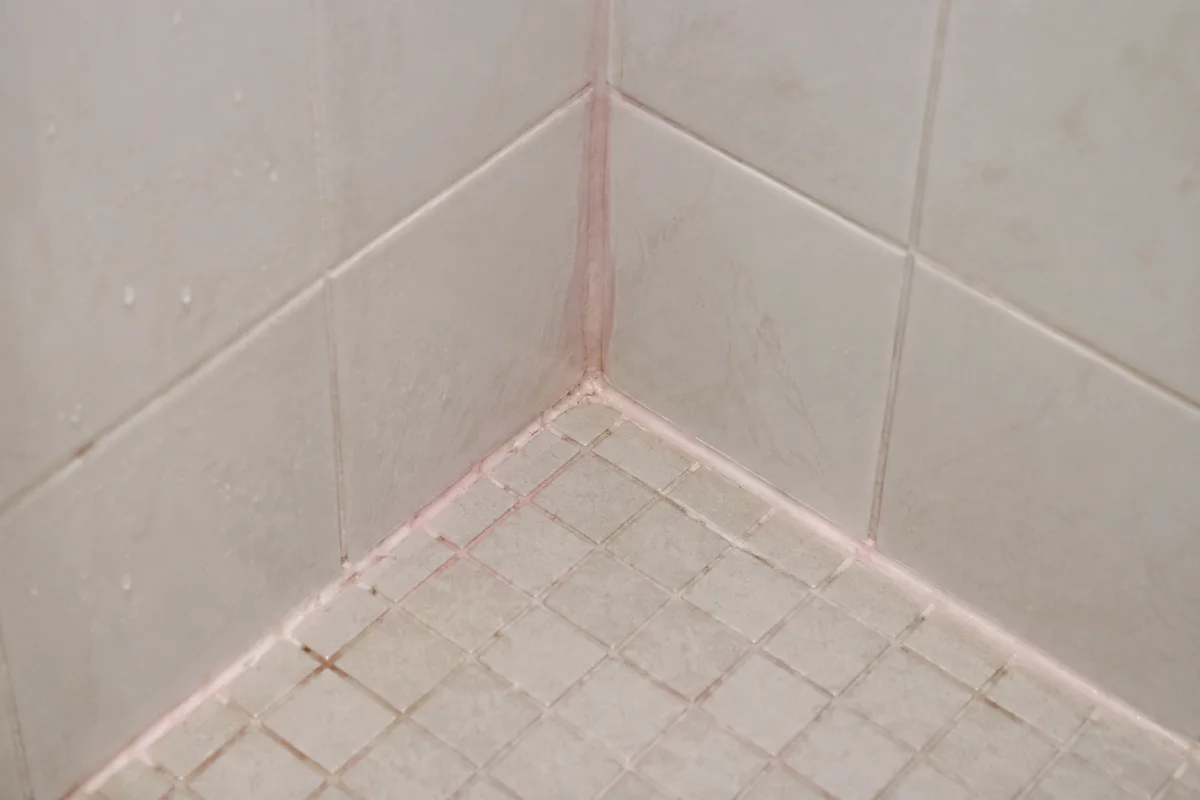
That pink or rose colored film is often not true mold at all. It is commonly associated with a bacterial biofilm, frequently linked to Serratia marcescens, which can produce a pink to reddish layer in wet areas, and in some cases the tint can come from yeasts or other organisms. It tends to feed on everyday bathroom residue such as soap scum, shampoo film, body oils, and mineral deposits, which is why it shows up where water and residue collect: shower corners, grout lines, silicone caulk, around drains, and on curtains. The important point is that two organisms can look alike and the same organism can look different on different surfaces, so color alone cannot identify what is present. Only laboratory analysis can confirm it.
The CDC's Emerging Infectious Diseases describes Serratia marcescens appearing as a pink to red discoloration in bathroom settings such as shower corners and basins. → CDC Emerging Infectious Diseases
Is pink mold dangerous?
The careful answer is that it depends, and reactions vary from person to person. For many healthy people, occasional pink film in a bathroom is mainly a cleaning and moisture issue rather than a major hazard. At the same time, organisms commonly associated with pink buildup may act opportunistically in some situations, so it should not be assumed to be automatically harmless either. Public health agencies note that damp indoor environments and mold can be associated with respiratory symptoms in some people, and that individual sensitivity varies. Treat recurring pink buildup as a signal worth addressing rather than a verdict in either direction. If symptoms persist, or if someone in the home is immunocompromised or has a respiratory condition, that is a conversation for a qualified health professional.
Public health guidance notes that damp indoor environments and mold can be associated with respiratory symptoms in some people. → CDC NIOSH: Mold and Dampness
The NIEHS provides a general public overview of mold and its potential health effects. → NIEHS: Mold Overview
Why does pink shower buildup keep coming back?
If it returns no matter how often you clean, that usually is not a sign that you cleaned it wrong. It is a sign that the conditions that grow it are still there. Pink biofilm thrives on a simple recipe of moisture, organic residue, warmth, and limited airflow, so a bathroom that stays humid after every shower rebuilds the film as fast as you remove it. In Florida this is amplified, because high outdoor humidity for much of the year means bathrooms can stay damp longer, especially in bathrooms with no working exhaust fan or a weak one, with frequent long hot showers, and without a regular cleaning routine, so the humidity never really gets a way out. Controlling that moisture, with ventilation, drying, and a cleaning routine, is the part that actually breaks the cycle.
The EPA emphasizes that controlling moisture is the key to controlling indoor mold. → EPA: Mold, Moisture and Your Home
Pink buildup vs real mold: how to tell the difference
People usually notice a difference, with the honest caveat that appearance can mislead. Pink buildup often looks like a slimy or filmy layer, pink to reddish, concentrated in the wettest spots, while mold often appears as spots or patches that can be black, green, gray, or brown, sometimes fuzzy or powdery. That said, lighting, surface, and stage of growth can blur these signals, and some real mold is light colored, so these patterns are a useful first read rather than proof. The only way to confirm what is present is sampling analyzed by a laboratory, which is exactly why color is a clue and not a diagnosis.
Where real mold can hide in a bathroom
The pink film on the surface can distract from the more important question, which is whether moisture is feeding something you cannot see. In Florida bathrooms, we often see pink film on shower corners or caulk while the real moisture concern, when present, is nearby: grout lines, vanity cabinets, exhaust fans, or areas behind tile. We have had homeowners in Miami and Orlando call about pink growth in a shower that had taken hold mostly because the bathroom had no working exhaust fan, so the humidity from long hot showers never had a way out. When I see this, the first thing I ask is simple: what products have you used to clean it, and how often do you clean the bathroom? The answers usually point to the real fix, which is airflow, drying, and a regular cleaning routine rather than just scrubbing the surface. Other common hiding spots include the ceiling above the shower, under or behind the exhaust fan, under the sink where a slow line weeps, behind loose tile, and in the subfloor after a shower pan leak.
How to clean pink shower buildup safely
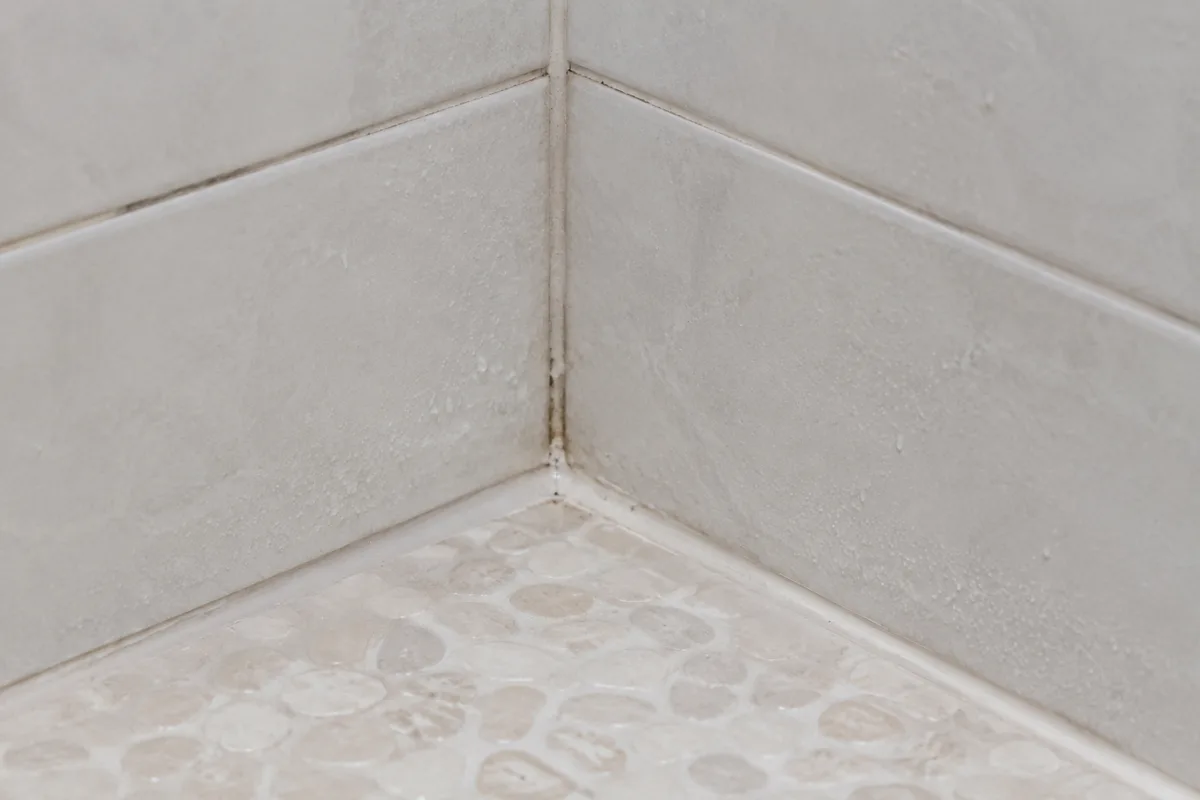
For routine pink film on hard surfaces, conservative steps are usually enough. Ventilate the room and wear household gloves, use a standard bathroom cleaner appropriate for your surface and let it sit briefly, scrub grout, caulk, corners, and the area around the drain with a soft brush, then rinse and dry the surfaces. Keep the exhaust fan running during and after showers, fix any drips, and replace caulk that is failing or discolored. A note on bleach, since it is the default reflex: bleach may lighten a surface stain, but it does not address the moisture source and does not reach growth inside porous materials, which is why buildup often returns. If the affected area is large, keeps spreading, or appears to extend behind or beneath surfaces, that is past routine cleaning, and it is worth having the moisture and any growth evaluated.
When should you test for mold in a bathroom?
Cleaning handles the surface, while testing answers the underlying question. In many cases my honest advice is to start simple: improve the ventilation, dry the area, and try cleaning the buildup with a brush and a regular bathroom cleaner before paying for any test. It becomes reasonable to consider a professional assessment when the buildup keeps returning despite that routine, when you see black or green growth nearby rather than just pink film, when there is a persistent musty odor, when there was a leak or water damage in or near the bathroom, or when someone in the home starts noticing respiratory symptoms, in which case a health professional should be part of that conversation too. An independent mold assessment generally includes a visual inspection, moisture readings, thermal imaging when appropriate to screen for temperature patterns that may indicate hidden moisture, and air or surface sampling analyzed by an independent, accredited laboratory, followed by a written report. Mold Rid Of operates under Florida DBPR Mold Assessor License MRSA3958, and performs this kind of independent assessment and testing. We do not perform remediation, which keeps the report focused on documenting the facts.
What Florida homeowners should remember
Pink film in the shower is common, and on its own it is often a moisture and ventilation message more than an emergency, but it is still a message that a surface stays wet long enough to grow something, and in a humid climate that same moisture can feed real mold in the spots you do not see. Treat the color as a starting clue, control the moisture, and when the signs add up, confirm rather than guess. If the buildup keeps returning, if you see black or green growth nearby, if there is a musty odor, or if there was a leak, Mold Rid Of can perform an independent mold assessment and testing, and we do not perform remediation. My job is to guide you through identifying what is actually in your property, not to sell you fear. Don't guess, just test. This article is educational and is not medical advice, so for health concerns related to mold or dampness, especially with persistent symptoms, immune conditions, or respiratory conditions, consult a qualified health professional.
Frequently Asked Questions
Is pink mold actually mold?
Often it is not true mold. The pink film in showers is commonly associated with bacteria such as Serratia marcescens, and sometimes with yeasts. Because color alone cannot identify an organism, laboratory analysis is what confirms it.
Is pink mold in the shower dangerous?
It depends, and sensitivity varies from person to person. For many healthy people it is mainly a cleaning and moisture issue, but it should not be assumed automatically harmless. If symptoms persist, or someone is immunocompromised or has a respiratory condition, consult a health professional.
How do I get rid of pink buildup in my shower?
Ventilate, clean grout, caulk, corners, and the drain with a suitable bathroom cleaner, rinse, and dry the surfaces. Keep the exhaust fan running and fix drips. Recurring buildup usually means the moisture conditions, not the cleaning, need to change.
Why does pink mold keep coming back?
Because the conditions that grow it, such as moisture, residue, warmth, and poor airflow, are still present. Removing the film without reducing moisture lets it rebuild, which is common in humid Florida bathrooms.
Should I test my bathroom for mold?
Consider an assessment if the buildup keeps returning, you see black or green growth, there is a musty odor, or there was a leak. Testing identifies what is present and where the moisture is, which cleaning alone cannot do.
