What Does a Mold Inspection Include? Step-by-Step Guide
Florida Licensed Mold Assessor; MRSA #3958
Why a Florida Mold Inspection Is Different from a Generic Home Inspection
A professional mold inspection is far more than someone walking through your house looking for visible mold. Licensed mold assessors use a systematic, multi-step process that combines visual assessment, advanced technology, and laboratory science to provide an accurate picture of your property's mold conditions. Here's exactly what to expect.
Step 1: The Visual Walkthrough and Moisture Mapping
Step 1: Visual Assessment & Moisture Mapping. The inspector begins with a thorough visual examination of the entire property, focusing on areas prone to moisture intrusion: bathrooms, kitchens, basements, attics, around windows, and HVAC systems. Professional-grade moisture meters are used to map moisture levels in walls, ceilings, and floors, identifying hidden water intrusion that could be feeding mold growth.
The EPA's mold cleanup guidelines outline when professional assessment is necessary based on the extent of visible mold growth. → EPA Mold Guide
Step 2: FLIR Thermal Imaging to Find Hidden Leaks Behind Walls
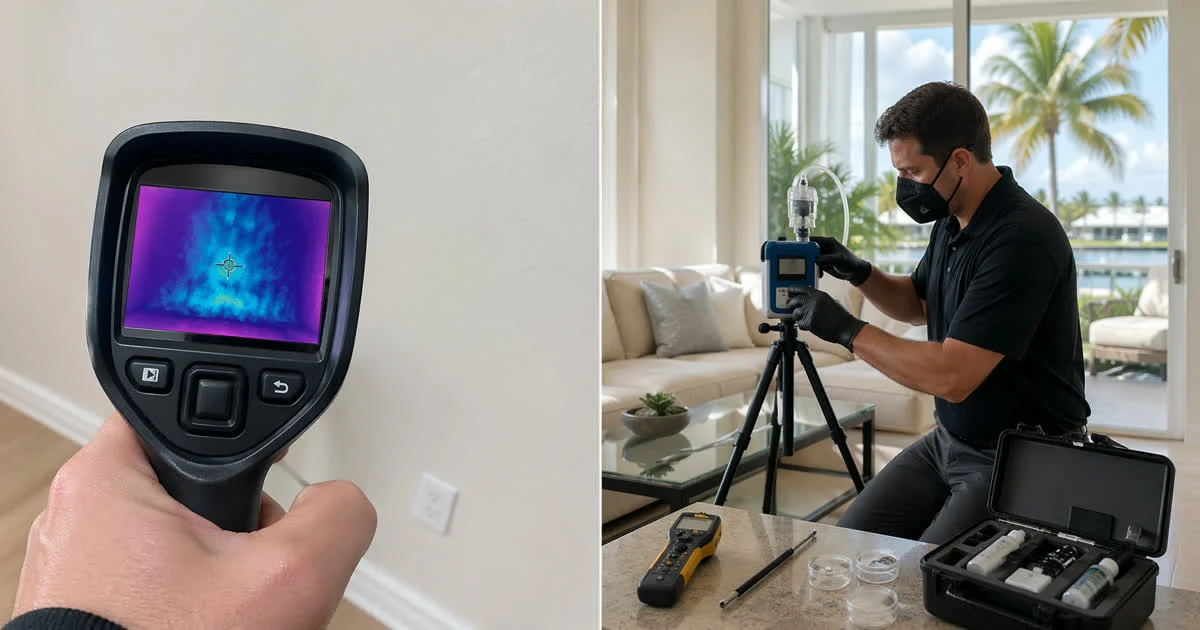
Step 2: Thermal Imaging Diagnostics. Using FLIR thermal imaging cameras, inspectors can detect temperature differentials behind walls and ceilings that indicate hidden moisture. This non-invasive technology reveals water damage and potential mold growth areas without cutting into any surfaces. It's especially critical in Florida, where leaks from hurricanes and tropical storms can go undetected for months inside wall cavities.
Step 3: AIHA-Accredited Air and Surface Sampling
Step 3: Air & Surface Sampling and Lab Analysis. Air samples are collected using calibrated air pumps that capture airborne mold spores onto cassettes. Surface samples may be taken from suspicious areas using swabs or tape lifts. All samples are sent to an independent AIHA-accredited laboratory for analysis. Lab results identify mold species, spore counts, and whether levels are elevated compared to outdoor baseline readings. You receive a detailed, insurance-ready report within 24–48 hours.
Air sampling and laboratory analysis protocols follow the IICRC S520 Standard for Professional Mold Remediation. → IICRC S520 Standard

