5 Warning Signs of Hidden Mold in Your Florida Home
Florida Licensed Mold Assessor; MRSA #3958
Why Hidden Mold Is More Common in Florida Than You Think
I've inspected hundreds of Florida homes over the years, and one thing I can tell you for certain is that the mold you can see is rarely the full story. Most homeowners call me after they spot a dark patch on a wall or ceiling, but by that point the problem has usually been developing for weeks or even months in areas they never thought to look. Florida's climate creates the perfect conditions for mold to thrive in hidden spaces, and it does so quietly. The warm, humid air that we live with year-round doesn't just affect the surfaces you can see. It works its way into wall cavities, behind cabinets, under flooring, and inside ductwork. I started Mold Rid Of because I saw too many families living with mold problems they didn't even know existed, and by the time they found out, the damage was already significant. Knowing what to look for before mold becomes visible can save you thousands in repairs and protect your family's health.
The Five Warning Signs Florida Homeowners Almost Always Miss
The first sign is a musty, earthy smell that lingers even after you clean. If you walk into a room and catch a damp odor that reminds you of wet cardboard or old books, there is a strong chance mold is growing somewhere nearby. The second sign is discoloration behind furniture, especially pieces that sit against exterior walls. In Florida, those walls absorb heat and moisture from outside while your AC keeps the interior cool, and the temperature difference creates condensation right where furniture traps the air. Pull your couch or dresser away from the wall every few months and check for dark spots or fuzzy patches. Third, persistent condensation on your windows. If you notice water droplets forming on the inside of your windows regularly, your indoor humidity is too high, and that moisture is feeding mold somewhere in your home. The fourth warning sign is allergies that get worse when you're indoors. If you or your family members experience sneezing, watery eyes, headaches, or congestion that improves when you leave the house, airborne mold spores could be the cause. The fifth sign is water stains on ceilings or walls that you can't explain. Even small stains from a slow roof leak or a condensation drip can create enough moisture for mold to colonize within 48 hours in our Florida humidity.
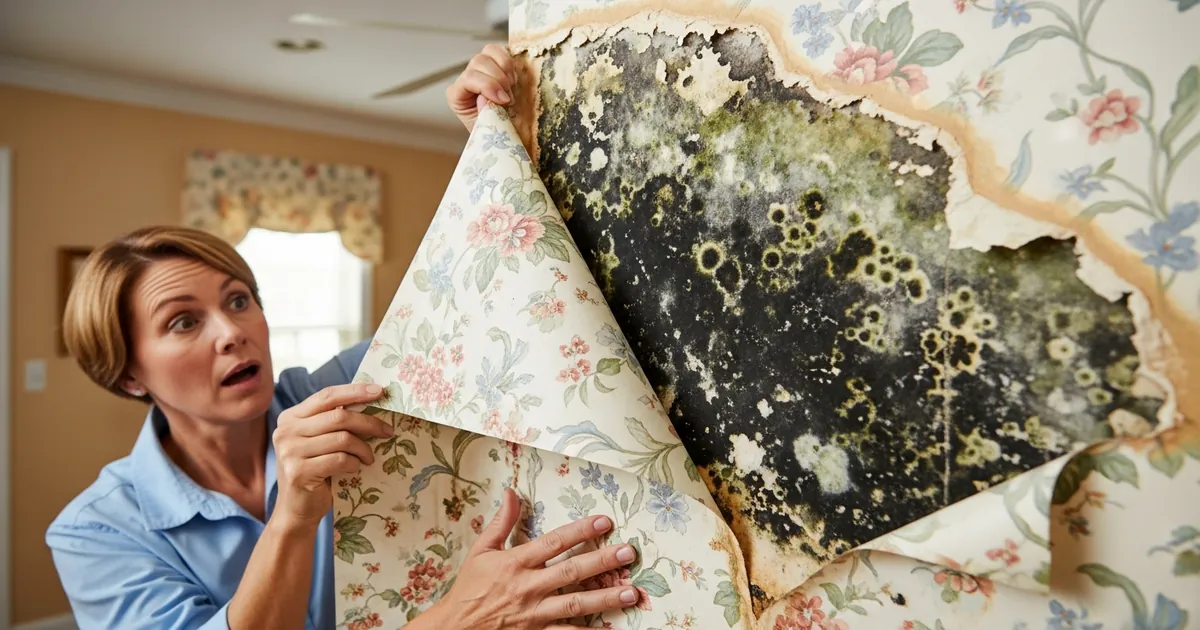
The EPA warns that mold may be hidden behind wallpaper, paneling, ceiling tiles, or under carpet, making visual inspection alone insufficient. → EPA Mold Guide
The Health Symptoms That Point Toward a Mold Problem
What concerns me most about hidden mold is the health impact on families who don't realize they're being exposed. Mold produces spores that become airborne and circulate through your HVAC system, spreading throughout the entire home. Prolonged exposure to elevated spore counts has been linked to respiratory issues, chronic sinus infections, skin rashes, and worsening asthma symptoms. Children, elderly family members, and anyone with a compromised immune system are particularly vulnerable. I've seen cases where families spent months going back and forth to doctors trying to figure out why their kids kept getting sick, only to discover a major mold colony growing inside a bathroom wall or under kitchen cabinets. The frustrating part is that these health effects develop gradually. You might not connect your morning headaches or your child's persistent cough to the air quality in your home because the symptoms build up slowly over time. In Florida, where we keep our homes sealed tight against the heat and run the AC constantly, we're essentially recirculating the same indoor air. If that air contains mold spores, every member of your household is breathing them in, hour after hour, day after day.
When the Signs Justify a Professional Indoor Air Assessment
If you've noticed any of these warning signs, the smartest move is to get a professional mold assessment before the problem grows. Mold Rid Of performs assessment and inspection only. We hold MRSA License number 3958 and carry IICRC certification. We do not perform remediation, which means we have zero financial incentive to exaggerate findings or push you toward unnecessary work. Our job is to identify what's happening in your home, document it accurately, and give you a clear report so you can make informed decisions. We use air sampling, moisture mapping, and thermal imaging to find mold that visual inspection alone would miss. A proper assessment tells you exactly what type of mold is present, how elevated the spore counts are, and where the moisture source is located. Without identifying and addressing the moisture source, any cleanup effort is temporary. If you're experiencing any of the signs I described, don't wait for visible mold to appear. Call us at (786) 616-6307 or visit moldridof.com to schedule an inspection.
