How to Protect Your Belongings from Mold Damage in Florida
Florida Licensed Mold Assessor; MRSA #3958
Why Florida Closets and Storage Rooms Are Mold Hotspots
When most people think about mold damage in Florida, they picture walls, ceilings, and bathrooms. But some of the most frustrating mold damage I see affects personal belongings: clothing covered in white or green fuzz, leather shoes and bags ruined beyond repair, family photos stained and warped, and electronics corroded by moisture. In my years of inspecting homes across South Florida, I've seen homeowners lose thousands of dollars worth of personal items to mold that grew in closets, storage rooms, spare bedrooms, and garages. The common factor is always the same: these are spaces with limited air circulation and higher humidity levels than the rest of the home. In Florida, a closed closet can become a mold incubator within days if conditions are right. The door stays shut, the AC vent might not reach that space effectively, and moisture from clothes adds humidity to an already confined area.
The Most Vulnerable Items in a Humid Home: Clothing, Leather, Electronics, Paper
Certain materials are especially vulnerable to mold in Florida's climate. Natural fabrics like cotton, linen, silk, and wool provide organic food sources for mold and absorb moisture readily. Leather is extremely susceptible; I've seen entire collections of shoes, handbags, and jackets destroyed by mold in closets that the homeowner checked just a month earlier. Paper products including books, documents, photographs, and artwork on paper can develop mold stains that are permanent. Electronics suffer too, not from mold growing directly on circuit boards (though it happens), but from the corrosion caused by persistent moisture in poorly ventilated spaces. Wooden furniture, particularly pieces made from untreated or natural wood, will develop mold on surfaces and in joints. In Florida, the items at greatest risk are the ones stored in the least controlled environments: the guest room closet that stays shut for weeks, the garage shelving unit, the storage bins in the spare bathroom.
The EPA notes that mold can grow on virtually any organic material when moisture is present, including clothing, leather, paper, and wood products. → EPA Mold Guide
Practical Prevention: Dehumidifiers, Desiccants, and Storage Strategy
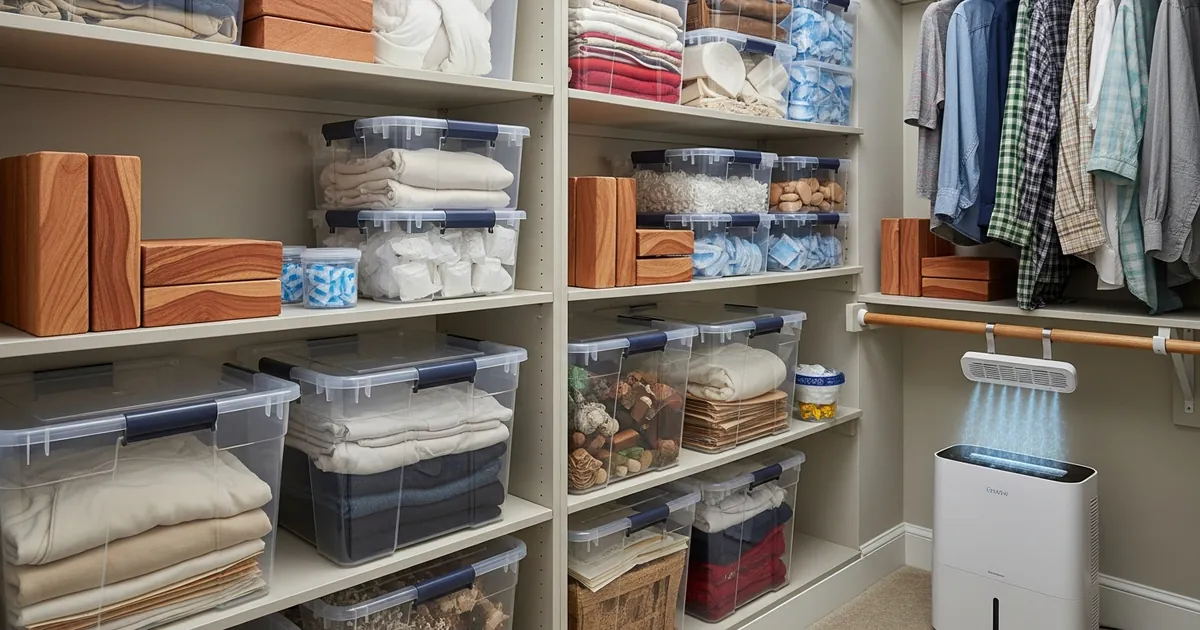
Protecting your belongings starts with controlling humidity in every space where you store them. Place inexpensive digital hygrometers in your closets and storage areas. You can find them online for ten to fifteen dollars, and they'll tell you exactly what the humidity level is at all times. If readings consistently exceed 60%, you need to intervene. Small, rechargeable dehumidifiers designed for closets work well in confined spaces. Silica gel packets or moisture absorber containers can supplement, but they aren't a replacement for actual dehumidification in high-humidity areas. Leave closet doors open when you can, or install louvered doors that allow air to circulate even when closed. Make sure AC supply vents are not blocked by furniture or belongings and that return air can flow freely. Never store wet or damp clothing, shoes, or towels in a closed space. For important documents, photographs, and irreplaceable items, consider sealed plastic containers with silica gel packets inside. Store these off the floor, because floor-level storage in Florida puts your belongings in the most humid zone of any room.
When Belongings Are Already Affected: Testing and Documentation
Even with good prevention habits, Florida's humidity will sometimes win. If you open a closet and find mold on your belongings, or if you notice a musty smell coming from a storage area, the affected items need attention, and so does the space itself. Cleaning mold off a jacket doesn't solve the problem if the closet humidity is still at 75%. That's where a professional assessment becomes valuable. At Mold Rid Of, we check every area of the home during an inspection, including closets, storage rooms, and other spaces that often get overlooked. We measure humidity levels room by room, check for hidden moisture in walls adjacent to closets, and identify whether your HVAC system is adequately conditioning all spaces. We hold MRSA License number 3958 and are IICRC certified. We perform assessment only and never remediation, so our recommendations are always objective. If you've found mold on your clothes, shoes, or other belongings, call Mold Rid Of at (786) 616-6307 or visit moldridof.com. We'll identify the cause and give you a clear plan to protect what matters to you.
