How to Choose a Mold Removal Company After an Independent Assessment
Florida Licensed Mold Assessor; MRSA #3958
The First Mistake Homeowners Make When Mold Shows Up
Note: Mold Rid Of does not perform mold removal or remediation. We provide independent mold assessments, testing, and clearance documentation so you can hire a third-party remediator with accurate information. You found mold in your house. Your gut says to Google 'mold removal company' and call the first result. I get it. You want it gone yesterday. But I have inspected over 2,000 properties across Florida, and I keep seeing the same mistake: homeowners pick the wrong mold removal company and end up paying thousands for unnecessary work, getting their insurance claim denied, or watching the mold come right back three months later. This guide covers what to look for, what to avoid, and the one step most people skip before they hire anyone.
Mold Cleanup Categories Explained: What Licensed Remediators Do
Before you start calling mold removal services, it helps to know what is growing in your walls. Florida's heat and humidity make it one of the worst states for mold. Aspergillus shows up on walls, insulation, and paper products and triggers allergic reactions and respiratory problems. Cladosporium lives on fabrics, carpets, and wood. It grows in warm and cool conditions, so it is a year-round issue here. Stachybotrys chartarum, the black mold that makes the news, grows on drywall and ceiling tiles when moisture sits too long. Penicillium spreads fast on water-damaged materials, and we see it after flooding, pipe leaks, and hurricane damage. Not all mold is visible. Some of the worst infestations I have documented during thermal imaging scans were behind walls, under flooring, or inside HVAC ducts where nobody thought to check. Long-term exposure can cause chronic coughing, sneezing, sinus congestion, skin rashes, worsening asthma (especially in kids), headaches, fatigue, and respiratory infections in severe cases. If someone in your house has allergy symptoms that get worse indoors, mold might be the reason. A professional mold inspection is the fastest way to find out.
The EPA recommends hiring qualified professionals for mold remediation and warns that improper cleanup can spread contamination to previously unaffected areas. → EPA Mold Guide
The Professionals You Actually Need in the Right Order
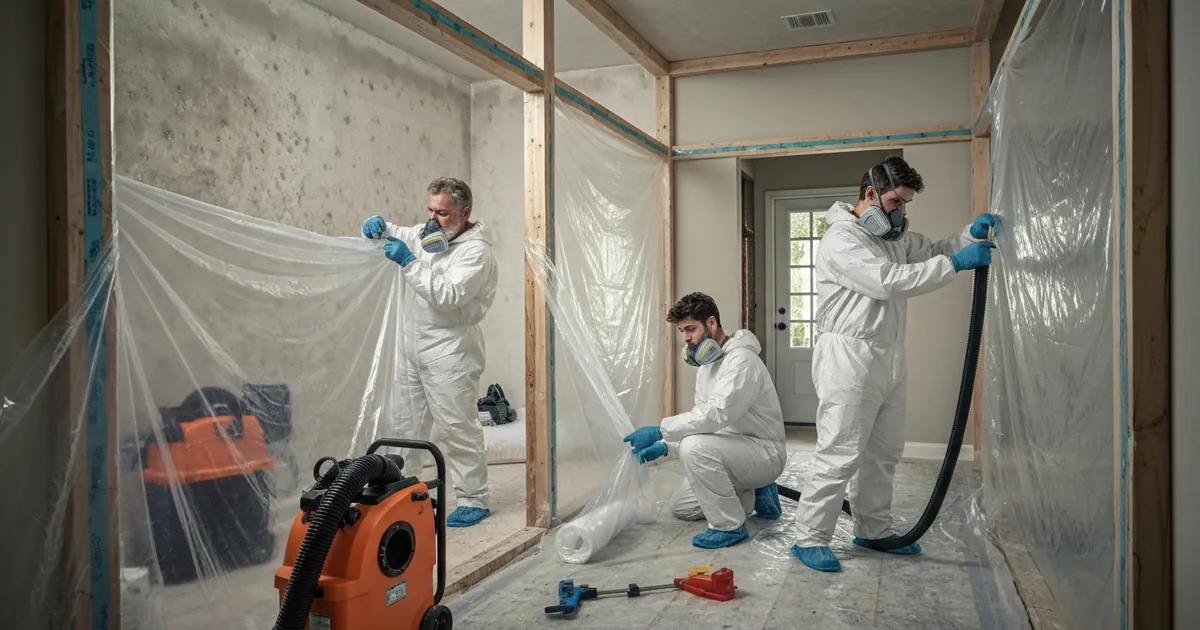
A qualified mold removal company has equipment you don't: containment systems that stop spores from spreading to clean rooms during removal, HEPA filtration that catches microscopic spores regular vacuums miss, moisture detection tools to find the source (not just the surface), documentation that insurance companies and real estate transactions require, and post-remediation testing to confirm the mold is gone. The point is not scrubbing what you can see. It is finding the water source, pulling out contaminated materials the right way, and testing the air after. I inspect homes where the owner tried to handle it themselves. The outcome is predictable: the mold comes back because nobody found the moisture source, spores spread to rooms that were clean before, wrong chemicals create fumes or damage surfaces without killing anything, and the lack of documentation means the insurance claim gets denied and the home sale stalls. The EPA says homeowners can clean small patches under 10 square feet on non-porous surfaces. Beyond that, especially in Florida where humidity feeds regrowth, you need a professional.
Credentials That Matter: MRSA, MRSR, IICRC, and AIHA Lab Accreditation
Most homeowners pick based on price or whoever answers the phone first. Both are bad strategies. Any mold removal company worth hiring should have IICRC certification (Institute of Inspection Cleaning and Restoration Certification, the industry standard), a state license (in Florida, mold assessors need an MRSA license under Chapter 468 and mold remediators need a separate MRSR license), and EPA compliance for proper containment and disposal. Ask for the license number and verify it on the Florida DBPR website. Takes two minutes. Saves you from unlicensed operators who disappear when things go wrong. Ask them: how many mold projects have you done in this area? Residential, commercial, or both? Walk me through your process start to finish. What do you do when mold shows up in the HVAC system? A company that has been handling mold removal services in Florida will know hurricane damage patterns, how year-round humidity affects regrowth, what construction materials South Florida builders use, and what local insurers expect in documentation. Look past the star rating in reviews. Read for specific descriptions of work performed, how the company handled surprises, communication during the project, and whether the reviewer's insurance claim was accepted. Check Google, BBB, and Yelp. A mold removal company should carry general liability insurance ($1 million minimum), workers compensation insurance, and pollution liability insurance specific to mold and environmental work. Ask for certificates of insurance, not a verbal 'yeah we are covered.' Get any warranty in writing before work starts.
Florida Statutes Chapter 468 requires mold assessors (MRSA) and mold remediators (MRSR) to hold separate licenses, and prohibits the same entity from performing both roles on a single project. → Florida Statutes Chapter 468
What Licensed Remediators Typically Charge for Mold Cleanup in Florida
Professional mold removal companies use different methods depending on the situation: physical removal (cutting out contaminated drywall, insulation, carpet), HEPA vacuuming to capture surface spores on materials that can be preserved, antimicrobial treatment with EPA-registered products, dry ice blasting that strips mold from wood and concrete without chemicals, and encapsulation to seal surfaces and prevent regrowth. Mold remediation cost depends on scope. Small area under 50 square feet: $500 to $1,500. Medium project (50 to 200 square feet): $1,500 to $5,000. Large project (200+ square feet or structural involvement): $5,000 to $15,000. Whole-house remediation in severe cases: $15,000 to $30,000 or more. These are Florida numbers. The biggest cost factor is not the mold you can see. It is what the inspection finds behind the walls. That is why you should get an independent mold inspection before hiring a removal company. Without one, the company profiting from removal is also the one deciding how much removal you need. That is a conflict of interest, and it costs homeowners money every day.
How Insurance Handles Mold Claims and Why Documentation Is Leverage
The most common question I hear: does homeowners insurance cover mold removal? Short answer: it depends on how the mold got there. Most Florida homeowners policies cover mold only if it came from a covered event. Mold from a sudden pipe burst, appliance failure, or storm damage already in your policy is typically covered. Mold from neglect, poor maintenance, humidity, or slow leaks you ignored is not. Many Florida policies cap mold at $10,000 to $25,000 regardless of actual cost. For your insurance to cover mold remediation, you typically need documentation of the covered event that caused moisture, a professional independent mold inspection report from a licensed assessor (not from the remediation company), proof you acted promptly after discovering the issue, and a detailed scope of work from the remediation company that matches the inspection findings. The independent inspection report is what makes or breaks the claim. Insurance adjusters use it to validate everything. If the same company inspects and removes, many insurers push back on the findings. Renters insurance usually does not cover mold damage to the building since that is on the landlord. It may cover damage to your personal belongings, temporary relocation if the unit becomes uninhabitable, and medical expenses from mold exposure depending on the policy. If you are renting and suspect mold, notify your landlord in writing right away. Florida tenant protection laws require landlords to address habitability issues, and mold qualifies.
The CDC advises that mold can begin growing within 24 to 48 hours after water exposure, making prompt action and documentation critical for insurance claims. → CDC Mold Guidelines
The Decision Checklist Before You Sign Any Contract
Before you hire anyone, ask about their mold inspection process. If a mold removal company offers to inspect AND remove the mold, that is a red flag. Florida law requires mold assessment and mold remediation to be done by separately licensed companies (MRSA vs. MRSR licenses). The same entity is generally restricted from performing both services on the same project, with specific statutory exceptions. The separation exists for your protection: the company measuring the problem should not profit from fixing it. Start with a licensed, independent mold assessment company. They will document the type, extent, and source of the mold, then write a protocol any qualified removal company can follow. A good mold removal company should accept your independent inspection report as the scope of work, provide itemized estimates that match insurance documentation requirements, work with your adjuster directly if needed, and never pressure you to start before the claim is approved. I run Mold Rid Of, a licensed mold inspection and testing company operating across Florida. We hold MRSA License #3958 and IICRC certification. We do not do remediation, period. That means when we tell you what is in your walls, we have no financial reason to exaggerate or minimize. Whether it is a $500 fix or a $15,000 project, you get the truth and a detailed protocol any qualified mold removal company can execute. If you are dealing with mold or suspect a problem, the best first move is an independent inspection. Schedule yours at moldridof.com or call (786) 616-6307.
