Can Mold in Your Home Make Your Pets Sick?
Florida Licensed Mold Assessor; MRSA #3958
Why Pets Feel Indoor Mold Before Their Owners Do
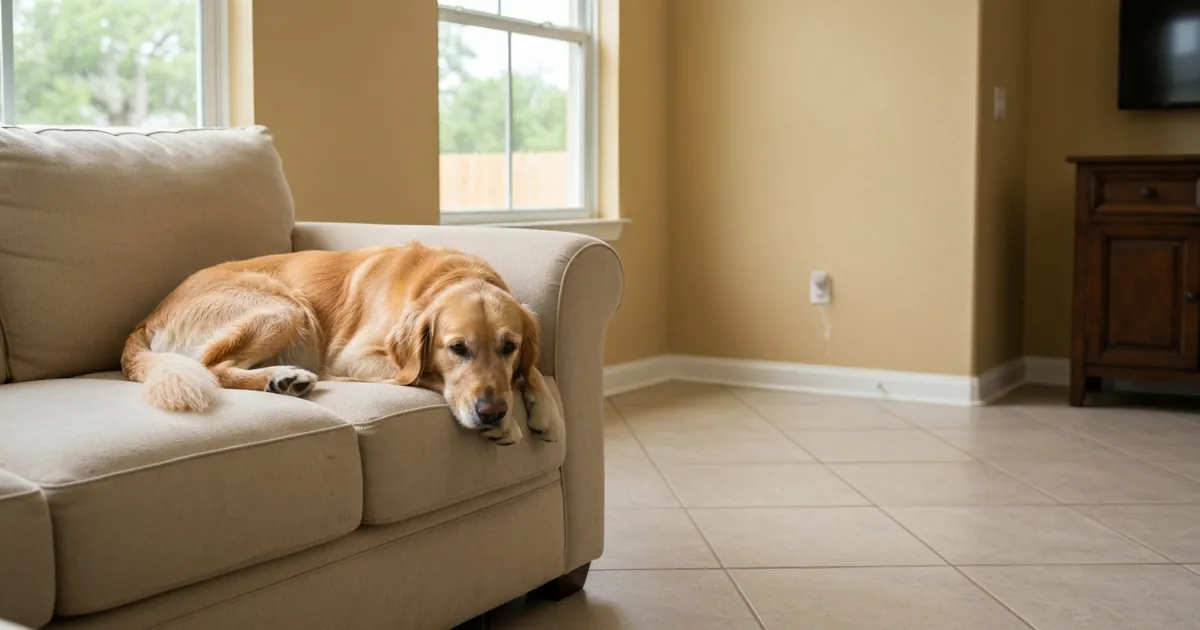
As a mold assessor, I spend a lot of time talking to homeowners about health effects on their families. But one question that comes up more and more often surprised me at first: can mold in the house make my pet sick? The short answer is yes, absolutely. And in many cases, your pet may show symptoms of mold exposure before any human in the household does. The reason is straightforward. Dogs and cats spend the vast majority of their time at or near floor level. They sleep on the floor, they press their noses into corners and baseboards, and they breathe air from the lowest part of the room where mold spores tend to settle and concentrate. A dog that sleeps on the carpet in a room with hidden mold growth is inhaling significantly more spores per breath than a person standing in the same room. Smaller animals like hamsters, guinea pigs, and birds are even more vulnerable because of their higher respiratory rates and smaller body mass.
The Specific Mold Symptoms to Watch for in Dogs, Cats, and Small Pets
The symptoms of mold exposure in pets can mimic a range of other conditions, which is why it often goes undiagnosed. In dogs, watch for persistent coughing, wheezing, nasal discharge, excessive scratching or licking (especially on the paws and belly), lethargy, and loss of appetite. Some dogs develop skin rashes or hot spots that don't respond to typical treatments. In cats, the symptoms are similar: sneezing, watery eyes, coughing, skin irritation, and behavioral changes like hiding more often or reduced grooming. Cats are also prone to developing upper respiratory infections when exposed to elevated mold spore levels. Birds are extremely sensitive to air quality, and mold exposure can be fatal for smaller species. If your pet has been making frequent trips to the vet for respiratory issues or unexplained skin problems, and treatments keep providing only temporary relief, the root cause could be the air they're breathing inside your home. One pattern I see regularly is the pet whose symptoms improve when the family goes on vacation and the animal stays at a boarding facility, then the symptoms return within a day or two of coming home.
The ASPCA notes that mold exposure in pets can cause respiratory distress, allergic reactions, and in severe cases, organ damage from mycotoxin ingestion. → ASPCA Pet Safety
The Species-Level Health Risks of Mycotoxin Exposure in Animals
The risk to your pet depends on several factors: the type and concentration of mold spores, the size of the animal, the duration of exposure, and any pre-existing health conditions. Certain mold species produce mycotoxins, which are toxic compounds that can cause serious organ damage with prolonged exposure. Black mold, or Stachybotrys chartarum, gets the most attention, but Aspergillus and Penicillium species are far more common in Florida homes and can be just as problematic for pets. Animals with flat faces like Bulldogs, Pugs, and Persian cats have compromised airways that make them more susceptible to respiratory irritants including mold spores. Senior pets and very young animals are also at higher risk. From a financial perspective, the cost comparison is worth considering. A single vet visit for respiratory issues can run $200 to $500. Allergy testing and ongoing treatment can easily reach $1,000 or more over a few months. A professional mold assessment for your home typically costs a fraction of what families spend trying to treat symptoms in their pets without addressing the underlying cause.
How to Protect Your Pets: Air Testing and Home Prevention
If your pet is showing any of the symptoms I described, and especially if those symptoms improve when the animal is away from home, I strongly recommend getting your indoor air quality tested. At Mold Rid Of, we perform comprehensive mold assessments that include air sampling to measure spore counts throughout your home. We can identify which rooms have the highest concentrations and pinpoint the moisture sources that are driving the mold growth. We hold MRSA License number 3958 and are IICRC certified. Because we specialize exclusively in assessment and inspection and never perform remediation, you can trust that our findings are objective and accurate. Your pets depend on you to provide a safe environment, and they can't tell you when the air they're breathing is making them sick. If you've noticed behavioral changes, respiratory issues, or chronic skin problems in your dog, cat, or any other pet, the indoor air quality of your home is worth investigating. Call Mold Rid Of at (786) 616-6307 or visit moldridof.com to schedule an assessment.
