How Attic Heat Leads to AC Condensation and Mold in Florida
Florida Licensed Mold Assessor; MRSA #3958
The 140 Degree Attic: Florida's Invisible Mold Factory
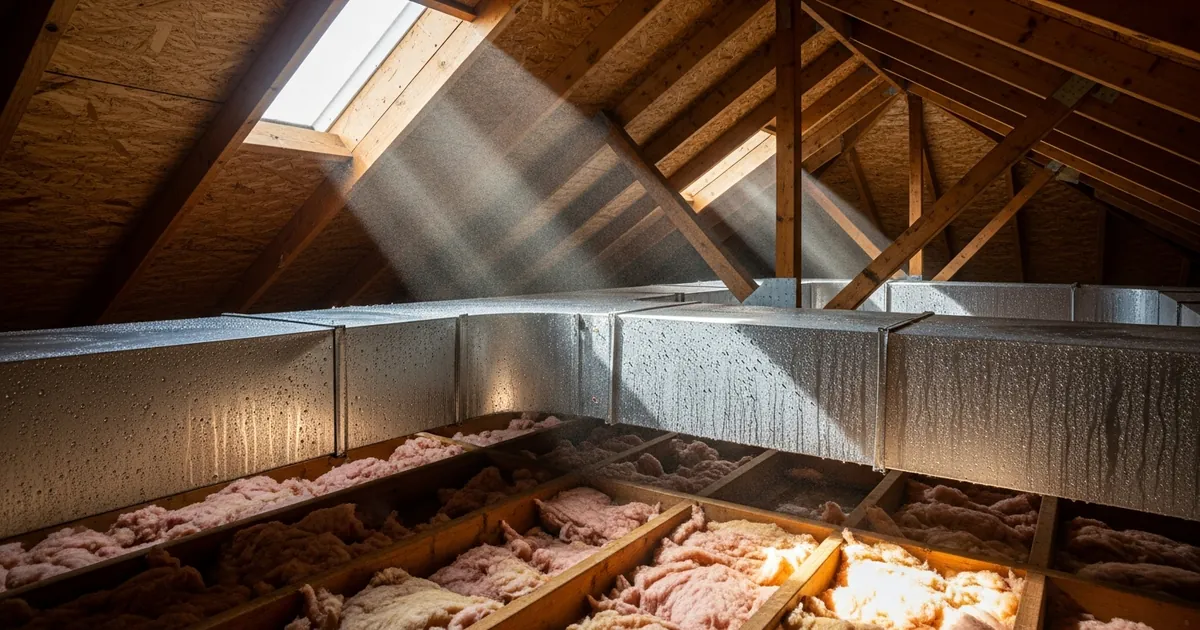
One of the most common mold problems I find in Florida homes doesn't start in the bathroom or kitchen. It starts in the attic, a space most homeowners never think about until something goes visibly wrong. Here's what happens: during a typical Florida summer day, your attic temperature can reach 130 to 150 degrees. At the same time, your air conditioning system is pushing 55-degree air through ductwork that runs directly through that superheated attic space. The temperature difference between the cold ducts and the hot attic air creates condensation on the exterior surface of the ductwork, the same way a cold glass sweats in the summer heat. That condensation drips onto insulation, framing, and drywall below. Over time, those wet materials become the foundation for mold colonies that can spread throughout your ceiling and wall cavities without any visible indication on the living space side. I see this pattern in homes across South Florida on a weekly basis, from older construction in Coral Gables to newer builds in Doral and Weston.
The Thermodynamics of Hot Attics, Cold Ducts, and Sweating Insulation
To understand the mechanics, think about the environment inside your attic. Solar radiation heats your roof throughout the day, and that heat radiates into the attic space. Without adequate ventilation, the attic becomes an oven. Your AC ductwork runs through this environment, and the cold surfaces of those ducts attract moisture from the surrounding hot, humid air. The condensation that forms on the outside of the ducts has to go somewhere. It drips down onto whatever is below: insulation batts, ceiling joists, drywall. If the ductwork has any leaks in the connections or seams, the problem multiplies because you're now pumping cold conditioned air directly into the attic, creating even more extreme temperature differentials and more condensation. The duct boots, which are the connection points where ducts meet your ceiling vents, are the most vulnerable spots. Poorly sealed duct boots allow hot attic air to mix with cold supply air right at the vent, and you get condensation forming on the ceiling drywall around the vent opening. This is why dark stains or rings around ceiling vents are one of the most reliable indicators of attic moisture problems.
The EPA emphasizes that controlling moisture in HVAC systems and ensuring proper insulation are critical steps in preventing indoor mold growth. → EPA HVAC Moisture Control
The Warning Signs of Duct and Attic Mold That Homeowners Ignore
There are several telltale signs that your attic is creating a condensation and mold problem. Dark stains or discoloration around your ceiling AC vents are the most obvious. If the drywall around a supply vent looks like it has a shadow or water ring, moisture is condensing at that junction. Water stains on the ceiling that don't correspond to any plumbing above are another indicator, and homeowners often mistake these for roof leaks when the actual cause is duct condensation. If you go into your attic and see wet or discolored insulation around the ductwork, that's a confirmed moisture problem. Black or dark green discoloration on the underside of the roof decking or on ceiling joists means mold has already colonized. You might also notice that certain rooms feel more humid than others even though the AC is running. This often happens when a particular duct run is sweating heavily and the excess moisture is entering the room through the vent. A musty smell that seems to come from the ceiling is another common complaint.
Prevention: Insulation, Airflow, and When Thermal Imaging Is Worth It
Prevention starts with proper attic insulation and sealing. Every duct connection, boot, and seam in the attic should be sealed to prevent air leakage. Duct insulation should be intact and rated for Florida conditions. Attic ventilation, through soffit vents, ridge vents, or powered ventilators, helps reduce the extreme temperature buildup. A radiant barrier on the underside of the roof decking can drop attic temperatures by 20 to 30 degrees. When I inspect homes at Mold Rid Of, we use thermal imaging cameras to identify temperature anomalies in ceilings and around ductwork without ever cutting into anything. We can see exactly where condensation is forming and where moisture has accumulated behind finished surfaces. We hold MRSA License number 3958 and are IICRC certified. Our assessments focus entirely on identifying the problem and its source, we never perform remediation, so our analysis is always independent. If you're seeing dark stains around your ceiling vents or noticing moisture issues you can't explain, your attic ductwork is the first place to investigate. Call Mold Rid Of at (786) 616-6307 or visit moldridof.com.
