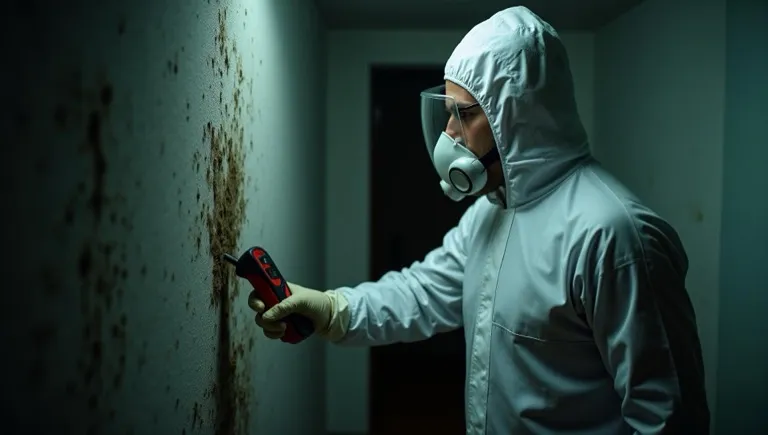
Mold Inspection Plantation: Central Broward Licensed Assessor
Plantation was carved out of the Old Plantation Water Control District drainage system and incorporated in 1953, which means every block in the city sits on land that was managed wetland before it was a neighborhood. From the mid-century ranch homes in the Historic District and Central Plantation to the master-planned Jacaranda golf community and the equestrian estates in Plantation Acres, the moisture profile changes block by block. Florida-licensed mold assessors (MRSA #3958) operating under Florida Statute 468.8419, the law that legally separates mold assessment from remediation. We only assess and test. We never remediate. No sales pipeline, no upsell, no conflict of interest.

Get Your Free Mold Estimate
Areas We Serve in Plantation
Local Florida Service Area
Our licensed assessors (MRSA #3958) cover all neighborhoods in the Plantation area. Priority scheduling is available for active water intrusion when schedule capacity allows.
Why Plantation Homeowners Choose Mold Rid Of
Independence First: We do not perform remediation. Our only deliverable is an honest assessment, so the results you pay for are the results we actually find.
State Licensed: Florida DBPR Mold Assessors (MRSA #3958) and IICRC certified. Every inspector is fully credentialed under Florida Statute 468.8419.
Mid-Century Experience: Plantation has one of Broward's largest inventories of 1950s and 1960s ranch homes. Those buildings have specific moisture-failure patterns we have documented over hundreds of inspections.
60-Minute Emergency Response: Pipe burst, roof leak, or storm intrusion? We cover Plantation, Sunrise, Davie, Lauderhill, and Fort Lauderdale with same-day availability.
Reports Designed for Third-Party Review: Lab reports with species ID and spore counts commonly used for insurance, real estate, and remediation documentation.
Professional Equipment: FLIR thermal imaging, Protimeter moisture meters, and Zefon Air-O-Cell spore-trap sampling. Calibrated tools that detect what visual inspection alone misses.
Why Mold Is a Central Broward Reality in Plantation
"Plantation sits at the intersection of three moisture realities. First, the city was built on drained wetland managed historically by the Old Plantation Water Control District, so the groundwater table still sits within 3 to 5 feet of the surface across most of the city. Second, Plantation has one of Broward's largest concentrations of mid-century ranch homes, which were built before modern vapor barriers and weep-screed standards. Third, Central Broward averages roughly 52 inches of rain per year with September regularly exceeding 8 inches in a single month. Combine that with HVAC systems running against 75 percent humidity for 9 months a year, and you have an environment where spore counts inside a home can exceed outdoor baseline without any visible mold growth. Our licensed assessors use thermal imaging and calibrated moisture meters to find the hidden sources before damage compounds."
Our Mold Services in Plantation
Mold Inspection Plantation
Room-by-room visual assessment with moisture mapping and FLIR thermal imaging by a licensed Florida assessor (MRSA #3958).
Mold Testing Plantation
Air and surface sampling analyzed by independent AIHA-accredited laboratories. Species identification and spore counts returned in 24-48 hours.
Indoor Air Quality Plantation
IAQ assessments detecting Aspergillus, Penicillium, Cladosporium, and Stachybotrys colonies hiding in HVAC systems and wall cavities.
Lab Reports
Science-driven reports with species identification, spore counts, moisture readings, and remediation protocol recommendations. Designed for review by insurance adjusters, lenders, title companies, and remediation contractors.
Thermal Imaging Plantation
FLIR infrared cameras detect hidden moisture behind drywall, ceilings, and HVAC plenums without cutting or opening walls.
Frequently Asked Questions: Plantation
Local Water & Humidity Challenges in Plantation
1Built on Old Plantation Drainage District Land
Before incorporation in 1953, Plantation was managed by the Old Plantation Water Control District, which drained and engineered the area out of Everglades wetland. The drainage infrastructure still functions, but the underlying soil hydrology has not changed. Groundwater tables across most of the city sit 3 to 5 feet below grade, keeping slab-on-grade homes at constant risk for capillary moisture rise into baseboards and lower drywall.
2Mid-Century Housing Stock Without Vapor Barriers
The Historic District, Plantation Park, and Central Plantation contain hundreds of ranch homes built between 1954 and 1972. Those buildings predate modern vapor barrier standards, sealed soffit detailing, and current weep screed practice. Under decades of South Florida humidity load, the wall assemblies accumulate moisture that never fully dries. Our thermal imaging consistently reveals cool damp signatures behind plaster walls in these homes that no visual inspection would catch.
3Dense Tree Canopy and North-Facing Shade
Plantation is known for its urban forest. That canopy cools the city but also shades north and east elevations of many homes from any drying sun exposure. Wood-framed overhangs, wood soffits, and cedar shake accents in older Plantation neighborhoods stay damp for weeks after a rain event. Those persistently damp surfaces are where we most commonly detect external mold growth before it migrates into the wall cavity.
4Legacy Flood Damage from 1999 and 2000
Tropical Storm Irene in October 1999 and the October 2000 No-Name Storm caused significant flooding in Plantation, especially along the South New River Canal and the lower-lying parts of Central Plantation. Many homes received cosmetic repair only, without deep drying or professional remediation of wall cavities. Decades later, we still find active legacy mold colonies behind drywall in homes that absorbed water during those events. Pre-listing inspections reveal this history on a regular basis.
Mold Resources for Plantation Homeowners
Our Services
