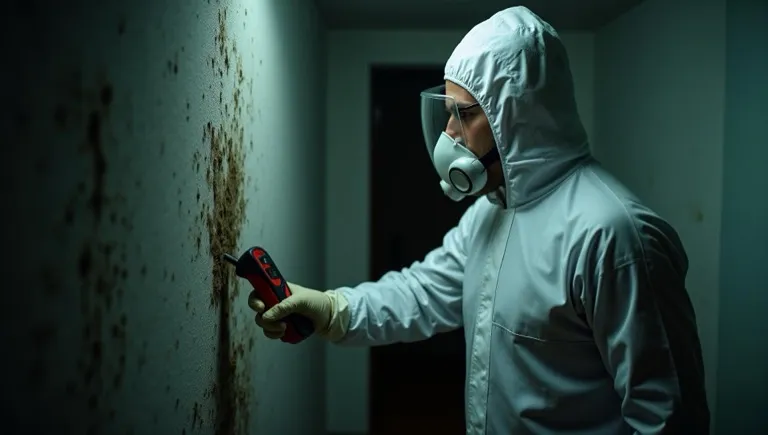
Mold Inspection Pembroke Pines: West Broward Licensed Assessor
Pembroke Pines sits on the edge of the Everglades in West Broward, where the groundwater table runs within 3 feet of the surface and decades of slab-on-grade construction have absorbed subsurface moisture year after year. From Silver Lakes and Pembroke Falls on the western border to Chapel Trail and Walnut Creek closer to the Sawgrass, moisture rarely leaves this zip code. Florida-licensed mold assessors (MRSA #3958) operating under Florida Statute 468.8419, the law that separates assessment from remediation. We test. We never remediate. No sales agenda, no upsell, no conflict of interest.

Get Your Free Mold Estimate
Areas We Serve in Pembroke Pines
Local Florida Service Area
Our licensed assessors (MRSA #3958) cover all neighborhoods in the Pembroke Pines area. Priority scheduling is available for active water intrusion when schedule capacity allows.
Why Pembroke Pines Homeowners Choose Mold Rid Of
Independence First: We do not perform remediation. Our only product is an honest assessment, so when we find mold we have zero financial reason to exaggerate or invent it.
State Licensed: Florida DBPR Mold Assessors (MRSA #3958) and IICRC certified. Every inspector is fully credentialed under Florida Statute 468.8419, not a trainee.
Built-on-Wetlands Experience: Pembroke Pines was drained pine forest and marsh before it became a city. That history creates moisture patterns most inland-Florida assessors miss. We have mapped them.
60-Minute Emergency Response: Roof leak, pipe burst, or storm water intrusion? We cover Pembroke Pines, Miramar, Cooper City, and Southwest Ranches with same-day availability.
Reports Designed for Third-Party Review: Lab reports with species ID and spore counts commonly used for insurance, real estate, and remediation documentation.
Professional Equipment: FLIR thermal imaging, Protimeter moisture meters, and Zefon Air-O-Cell spore-trap sampling. Tools that see what a flashlight and a guess cannot.
Why Mold Is a Year-Round Problem in Pembroke Pines
"Pembroke Pines was developed on former wetlands and pine savanna at the edge of the Everglades. The groundwater table sits 2 to 4 feet below the surface in most of the city, meaning slab-on-grade homes in Silver Lakes, Pembroke Falls, and Chapel Trail wick ground moisture upward year-round, even when no rain has fallen. Layer in South Florida's summer thunderstorm pattern, the 2005 Hurricane Wilma damage that left many roofs with compromised flashing, and AC systems running 9 months a year to control 75 percent humidity, and you get one of the most persistent mold-growth environments in Broward County. Our licensed assessors use thermal imaging and calibrated moisture mapping to identify the hidden wet zones before they destroy drywall, baseboards, or your indoor air quality."
Our Mold Services in Pembroke Pines
Mold Inspection Pembroke Pines
Room-by-room visual assessment with moisture mapping and FLIR thermal imaging by a licensed Florida assessor (MRSA #3958).
Mold Testing Pembroke Pines
Air and surface sampling analyzed by independent AIHA-accredited laboratories. Species identification and spore counts in 24-48 hours.
Indoor Air Quality Pembroke Pines
IAQ assessments detecting Aspergillus, Penicillium, Cladosporium, and Stachybotrys colonies hiding in HVAC and wall cavities.
Lab Reports
Science-driven reports with species identification, spore counts, moisture readings, and remediation protocol recommendations. Designed for review by insurance adjusters, lenders, title companies, and remediation contractors.
Thermal Imaging Pembroke Pines
FLIR infrared cameras detect moisture trapped behind drywall, above ceilings, and inside wall cavities without invasive cutting or demolition.
Frequently Asked Questions: Pembroke Pines
Why Pembroke Pines Has a Unique Mold Risk Profile
1Built on Drained Wetlands
Before the 1960 incorporation, this land was pine savanna and cypress wetland draining into the C-9 canal. Modern Pembroke Pines sits on compacted muck and limestone fill with a water table that commonly runs 2 to 4 feet below the slab. Homes without premium vapor barriers absorb that moisture year-round, producing rising damp at baseboards, floor tiles, and the first foot of drywall.
2Everglades Edge Weather Pattern
The western city limits touch the Water Conservation Area. Summer convective storms move east off the Everglades and stall against the developed edge, dropping 3 to 5 inches of rain in under an hour multiple times per season. Roof penetrations, soffit vents, and window flashing that perform fine elsewhere get stress-tested here repeatedly, and minor failures show up as attic mold 6 to 12 months later.
3Hurricane Wilma's Hidden Damage
The 2005 Hurricane Wilma hit Pembroke Pines with 120 mph gusts and caused roof and window damage across nearly every subdivision. Many homeowners patched rather than fully replaced compromised assemblies, and the resulting legacy moisture sits trapped inside wall cavities and attic sheathing two decades later. Thermal imaging reveals the thermal signatures of those old wet zones even when the exterior looks perfectly repaired.
4Nine-Month AC Runtime
Pembroke Pines AC systems typically run from March through November, meaning evaporator coils accumulate organic biofilm for three quarters of the year. Condensate pans that are not inspected annually become microbial incubators, and the same ductwork then distributes spores to every room in the home. HVAC-sourced mold is the most-missed category on amateur inspections because it requires coil-specific sampling.
Mold Resources for Pembroke Pines Homeowners
Our Services
