Florida Landlord Mold Obligations Under Statute 83.51: The Real Rules
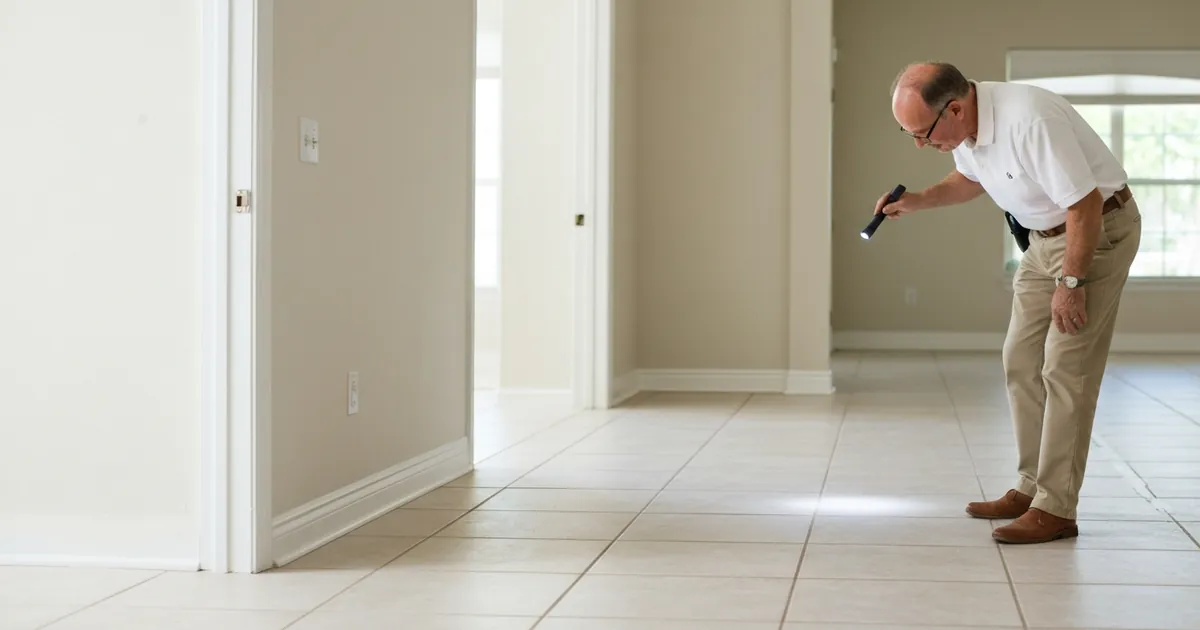
Florida Licensed Mold Assessor; MRSA #3958
What Florida Statute 83.51 Requires of Every Residential Landlord
Florida landlords routinely ask Mold Rid Of the same question when a tenant raises a mold complaint: 'Am I legally required to handle this?' The honest answer is that Florida law does not have a mold-specific landlord statute. What exists is the implied warranty of habitability under Florida Statute 83.51, and the tenant's duties under Florida Statute 83.52, and a body of Florida case law that has applied these general provisions to mold complaints for decades. Mold Rid Of, operating under Florida DBPR Mold Assessor License MRSA3958, has produced reports used by landlords defending against tenant claims, by property managers documenting compliance, and by insurance carriers determining coverage. Most Florida landlords act in good faith and most tenant mold complaints are legitimate, but the line between landlord responsibility and tenant responsibility is not always obvious. This article walks through what Florida Statute 83.51 actually requires of landlords regarding mold, where the tenant's duty under Statute 83.52 kicks in, how a landlord should respond to a mold complaint to preserve their legal position, and why independent assessment is the most important tool a Florida landlord has for resolving mold disputes before they escalate into litigation, insurance claims, or rental license issues.
The Implied Warranty of Habitability and How Courts Apply It to Mold
Florida Statute 83.51 divides landlord obligations into two categories. Statute 83.51(1) requires the landlord to 'comply with the requirements of applicable building, housing, and health codes' and to 'maintain the plumbing in reasonable working condition.' Statute 83.51(2) addresses dwellings other than single-family homes and duplexes, requiring extermination of vermin, clean common areas, working heat, garbage removal, running water, and hot water. Mold is not named, but it fits within these obligations in two ways. First, code violations: most Florida municipal housing codes prohibit dwellings from being 'unsanitary' or 'hazardous to health,' and widespread mold typically triggers these provisions. Second, the plumbing obligation: mold caused by a plumbing leak is directly downstream of a landlord duty under 83.51(1). Florida courts have consistently read these provisions together to hold landlords responsible for mold caused by conditions they were obligated to maintain. The implied warranty is not absolute; it applies only to material defects affecting health or safety, and it is conditioned on the landlord receiving notice of the defect and having a reasonable opportunity to cure. Landlords who act promptly on written notice are usually protected.
Florida Statute 83.51(1) requires landlords to comply with building, housing, and health codes and to maintain the premises in a condition that does not endanger health. → Florida Statutes 83.51
The Scope of Landlord Responsibility: Moisture Sources Under Their Control
The scope of the landlord's mold obligation depends entirely on the moisture source. Landlord-responsibility moisture sources include plumbing leaks (hot or cold supply, drain, waste, vent), roof failures and envelope leaks, HVAC defects (condensate overflow, oversized units cycling short, return air gaps), window and door seal failures, structural water intrusion (foundation, slab, exterior wall), and flooding from appliances the landlord supplies. Mold downstream of any of these is typically a landlord responsibility to assess and remediate under Florida Statute 83.51. The landlord is not responsible for mold caused by tenant behavior, covered in the next section. The practical implication is that when a mold complaint arrives, the landlord's first question should not be 'is there mold?' but 'what is the moisture source?' A licensed MRSA assessment answers this question with scientific documentation: thermal imaging to identify hidden moisture, calibrated meters to quantify the reading, air and surface samples to confirm the species and concentration, and a written report that identifies the moisture source and assigns responsibility based on physical evidence rather than argument.
The Tenant Duties That Shift Responsibility Under Statute 83.52
Florida Statute 83.52 is where landlord mold obligations end and tenant obligations begin. The statute requires tenants to 'comply with all obligations imposed upon tenants by applicable provisions of building, housing, and health codes,' 'keep that part of the premises which the tenant occupies and uses clean and sanitary,' 'remove from the tenant's dwelling unit all garbage in a clean and sanitary manner,' and 'use and operate in a reasonable manner all electrical, plumbing, sanitary, heating, ventilating, air-conditioning and other facilities and appliances, including elevators.' Applied to mold, these duties mean the tenant is responsible for mold caused by their own behavior: failing to run AC during humid Florida summers, blocking HVAC return vents with furniture, showering without running the exhaust fan, storing wet items in closed closets, failing to report a leak in a timely manner, introducing moisture through fish tanks or humidifiers without ventilation, or allowing grease and food residue to accumulate on kitchen surfaces. When a mold complaint arrives and the moisture source traces back to tenant behavior, the landlord has no obligation under 83.51 to remediate and may, in fact, charge the tenant for the cleanup. The independent MRSA assessment is the tool that resolves which side is responsible, because it documents the physical source rather than relying on which party is making the louder argument.
Florida Statute 83.52 defines the tenant's obligation to maintain the dwelling in a clean and sanitary condition and to use appliances and facilities in a reasonable manner. → Florida Statutes 83.52
How to Document a Mold Response That Protects the Landlord
How a Florida landlord responds to a mold complaint in the first 7 to 14 days determines almost every subsequent legal outcome. Three steps are critical. First, acknowledge the complaint in writing within 48 hours, even if only to say 'I received your notice and will inspect the property on [date].' Silence is interpreted as indifference and strengthens any subsequent tenant claim. Second, order an independent MRSA #3958 assessment rather than sending a remediation contractor. A remediation contractor has a financial incentive to find more mold requiring more remediation. An independent assessor under Florida Statute 468.8419 has no such incentive and produces a report that holds up against both tenant claims and insurance carrier scrutiny. Third, document every step: photographs with timestamps, email thread with the tenant, the assessment report, any remediation work orders, the post-remediation clearance test, and every invoice. A Florida landlord who can produce this documentation chain typically resolves the complaint before it becomes a 7-day notice, a code enforcement case, or a lawsuit. A Florida landlord who cannot produce it is often forced into settlement, regardless of the underlying merits.
Your Action Plan: Independent Assessment Before Any Remediation Contract
Florida landlords who are navigating a mold complaint should start with an independent assessment rather than negotiation. The $249.99 to $549 cost of an MRSA #3958 report is small compared to the potential downside: a failed 7-day notice defense (average settlement $5,000 to $15,000), a lost eviction case for nonpayment where the tenant withheld rent (potential unrecovered rent plus court costs), a code enforcement citation (fines plus mandated corrections), or a disclosure-based claim from a subsequent tenant (damages plus rescission of lease). The assessment creates the evidentiary record that makes all of these downstream risks manageable. Call Mold Rid Of at (786) 616-6307 for an independent MRSA assessment. We serve Miami, Fort Lauderdale, West Palm Beach, Tampa, Orlando, Naples, and the surrounding areas. We do not perform remediation under Florida Statute 468.8419, so our only interest is producing an accurate report. Landlords who use independent assessment proactively, before the 7-day notice arrives, save money, time, and legal exposure. Landlords who wait until the notice is delivered usually pay more for less protection. The statute does not require perfection from Florida landlords. It requires reasonable response to known defects, and the independent assessment is how that reasonableness is documented.
Frequently Asked Questions
Does Florida have a specific mold law for landlords?
No. Florida does not have a mold-specific statute for residential rental housing. Landlord obligations on mold are read through Florida Statute 83.51, the implied warranty of habitability, which requires landlords to comply with building, housing, and health codes and to maintain the premises in a condition that does not endanger health. Visible mold caused by a covered moisture defect falls within that obligation.
What mold is the landlord responsible for in Florida?
Mold caused by conditions the landlord is obligated to maintain: plumbing leaks, roof failures, HVAC defects, window or door seal failures, foundation intrusion, and structural vapor or moisture problems. The key legal question is the moisture source, not the mold itself. If the moisture comes from a system the landlord controls, the mold downstream of that moisture is typically a landlord responsibility.
What mold is the tenant responsible for in Florida?
Mold caused by tenant behavior under Florida Statute 83.52: not running AC during humid months, blocking HVAC vents, showering without exhaust fan use, storing wet items in closed spaces, failing to report a leak in a timely manner, or introducing moisture through fish tanks, indoor plants, or unventilated humidifiers. The tenant duty is reasonable use and timely reporting. Violation shifts mold responsibility to the tenant.
How should a landlord respond to a mold complaint?
In writing, within days, not weeks. Acknowledge receipt in writing, schedule an inspection, and strongly consider hiring an independent MRSA #3958 licensed assessor rather than sending a remediation contractor. An independent assessment identifies the moisture source, which resolves the landlord-versus-tenant responsibility question with evidence rather than argument. Document every step: email acknowledgement, inspection report, assessment report, and any remediation work completed.
How does an independent mold assessment protect a landlord?
Two ways. First, it documents the actual scope so the landlord does not pay for over-remediation driven by a contractor's incentive. Second, it creates the evidentiary record needed if the tenant files a 7-day notice, breaks the lease, sues for damages, or disputes a security deposit deduction. A licensed MRSA report with species ID, spore counts, and moisture source documentation is admissible evidence and typically ends disputes before they reach court.
